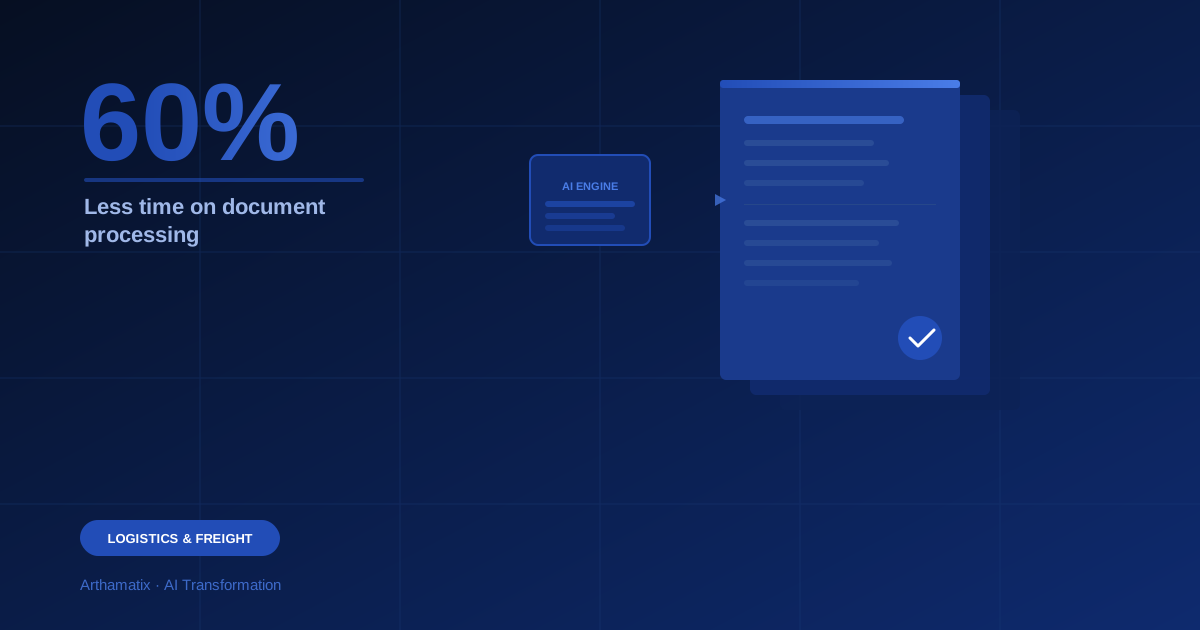

UAE freight forwarders who have automated their document workflows report cutting processing time by up to 60% – and reducing costly errors that delay customs clearance. If your team is still manually keying data from Bills of Lading, shipping instructions, and arrival notices, that gap is your opportunity.
The Document Problem Nobody Talks About
A mid-size freight forwarding operation in Dubai handles hundreds of shipments a week. Behind each shipment sits a stack of documents – Bill of Lading, commercial invoice, packing list, certificate of origin, customs declaration. Someone on your team reads each one, extracts the data, and types it into your TMS or ERP.
That process works. Until a vessel arrives early. Or a client sends a last-minute amendment. Or your best data entry operator is out sick. Then the bottleneck becomes a problem visible to your client.
The issue is not that your team is slow. The issue is that humans are being used to do what machines are now very good at – reading structured documents and extracting data accurately.
What AI Document Processing Actually Does
Modern AI document processing for logistics is not about scanning PDFs. It is about training a model to understand the specific documents your business receives – from your specific carriers, agents, and clients – and extract the right fields every time.
For a freight forwarder, this typically means:
- Automatically extracting shipper, consignee, commodity, weight, container number, and HS code from Bills of Lading
- Parsing arrival notices and triggering internal workflows without manual intervention
- Flagging discrepancies between documents before they reach customs
- Pushing extracted data directly into your TMS – no copy-paste
The result is not just speed. It is consistency. An AI model does not misread a container number on a bad scan. It does not skip a field because it is in a hurry. And when it is uncertain, it flags the document for human review rather than guessing.
Why UAE Freight Forwarders Are Moving Faster Than Others
The UAE logistics sector has specific pressures that make document automation particularly valuable. Jebel Ali Port is one of the busiest transshipment hubs in the world. Customs documentation requirements are strict. Turnaround expectations from clients – especially in e-commerce and retail – are measured in hours, not days.
At the same time, Dubai and Abu Dhabi have signaled clearly that AI adoption is a strategic priority. The regulatory environment is supportive. The talent pool for AI implementation is growing. And the competitive pressure from tech-enabled freight platforms means that manual operations are becoming a liability.
Forward-thinking freight forwarders are not waiting for the technology to mature. They are running pilots now, learning what works for their document mix, and building operational advantages that will be difficult for slower competitors to close.
What the 60% Time Saving Looks Like in Practice
The 60% figure comes from combining three efficiency gains that happen simultaneously when document AI is deployed:
- Extraction time eliminated – the manual reading and keying step is replaced entirely for clean, standard documents
- Error correction time eliminated – downstream corrections caused by data entry mistakes drop significantly
- Escalation time reduced – discrepancies are caught at the document stage, not after customs submission
The remaining 40% is time that still requires human judgment – unusual document formats, exceptions, client queries, and decisions that require context. AI handles the routine. Your team handles the complex.
How to Know If You Are Ready
Not every freight forwarding operation is at the same stage of readiness for document AI. The right conditions are:
- You process more than 50 shipment documents per day
- You have identifiable document types that repeat consistently
- You have a TMS or ERP that can receive data via API or structured import
- You have one or more staff members whose primary job involves reading and re-entering document data
If those conditions are true, the ROI case for document AI is usually straightforward. The technology cost is offset by staff time within months, and the quality improvement is immediate.
Starting Without Overhauling Everything
The practical concern we hear most from UAE freight forwarders is not about the technology. It is about disruption. Nobody wants to run a pilot that breaks live shipment handling.
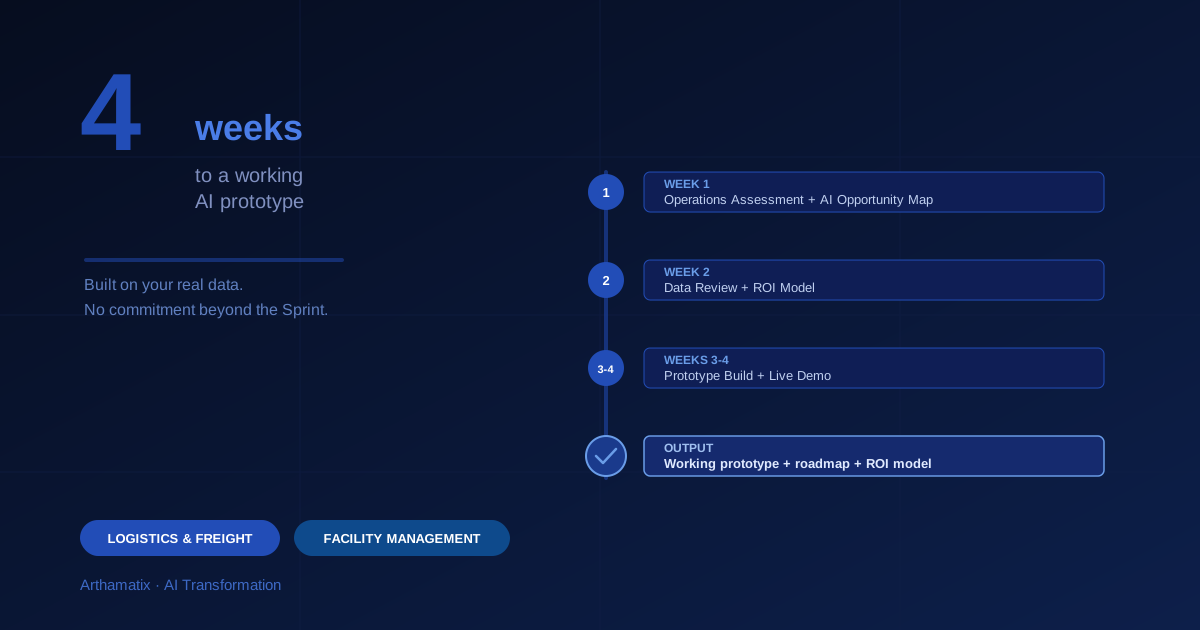
That is why the right starting point is a focused, time-boxed assessment – not a full implementation. At Arthamatix, we run AI Transformation Sprints that take 2 to 4 weeks. The output is a working prototype built on your actual documents, a clear picture of what can be automated, and an ROI estimate grounded in your real operation – not generic benchmarks.
You get a working demonstration before you commit to a full build. And if the numbers do not work for your situation, you know that before spending serious money.
If your team is spending hours each day on document data entry, it is worth a conversation. Reach out to Arthamatix and we will show you what is possible with your specific document mix.